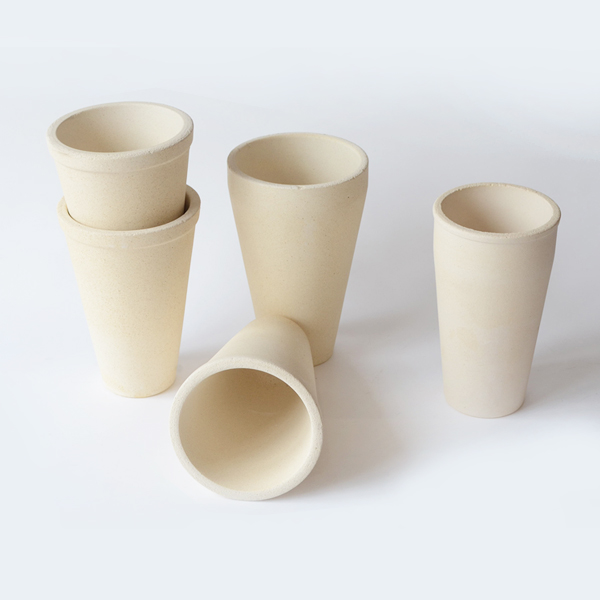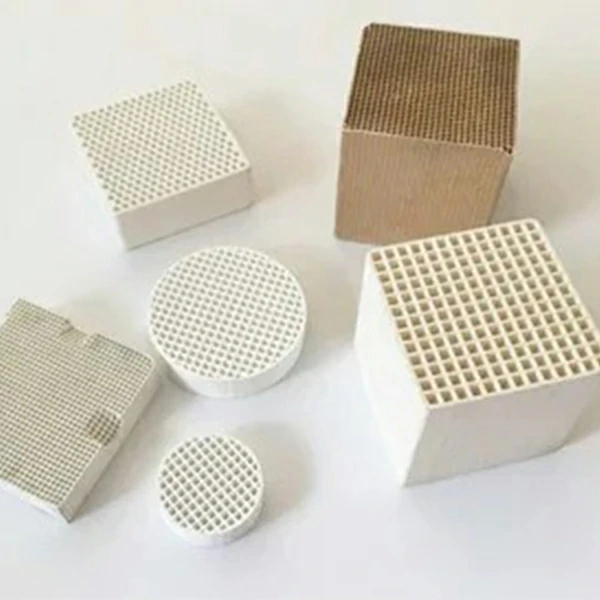
In gold fire assay, flux chemistry plays a central role in separating precious metals from the surrounding mineral matrix. A well-balanced fire assay flux helps promote fusion, collect precious metals, and form a separable slag. However, the same molten chemical environment can also attack the ceramic crucible, particularly when the flux composition, temperature, or firing conditions are not well matched to the crucible material.
This interaction is important because excessive chemical attack can thin crucible walls, increase flux penetration, and shorten service life. Understanding the relationship between flux chemistry and ceramic performance allows assay laboratories to reduce crucible consumption while maintaining reliable fusion results. This article examines the main components of fire assay flux, the causes of crucible erosion, and the factors laboratories should consider when selecting crucibles for demanding gold assaying applications.
What Is Fire Assay Flux and Why Does Its Chemistry Matter?
The Purpose of Flux in Fire Assay
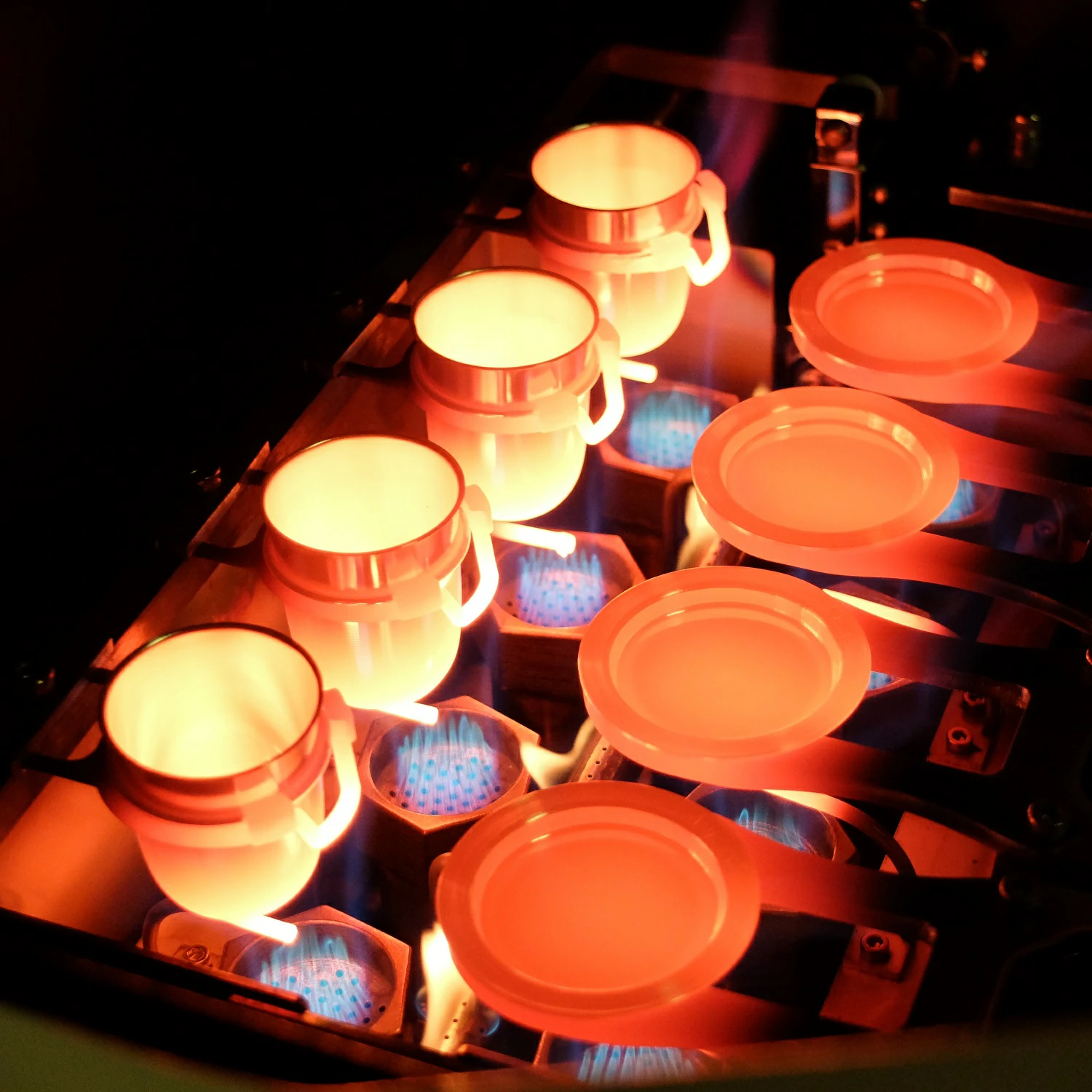
Fire assay flux is a mixture of chemical reagents added to an ore or other sample before high-temperature fusion. Its primary purpose is to create the chemical and physical conditions required to separate valuable metals from unwanted minerals.
During fusion, the flux helps the charge melt and promotes the formation of a fluid slag. Precious metals are collected into the lead phase, while many unwanted components are incorporated into the slag. The resulting separation allows the precious metal content of the sample to be determined through subsequent processing.
Flux therefore influences more than melting behavior. Its composition affects slag fluidity, oxidation and reduction conditions, reaction temperature, and interaction with the crucible. A flux system that is effective for one type of sample may not produce the same results when applied to a different mineral matrix or crucible formulation.
Common Components of Fire Assay Flux
The exact flux composition depends on the sample and the required assay conditions, but several components are commonly encountered in fire assay systems.
Litharge (lead oxide) provides a source of lead for collecting precious metals and participates in the oxidation reactions during fusion. Because lead oxide-containing molten phases can interact with ceramic materials, controlling this interaction is important for reducing litharge corrosion.
Sodium carbonate is an alkaline fluxing component that helps break down certain refractory minerals and contributes to slag formation. Its effect on the ceramic depends on the overall chemical balance of the charge and the composition of the crucible.
Borax flux helps promote melting and contributes to the formation and fluidity of the slag. Molten borate phases can also interact with ceramic surfaces, making crucible compatibility an important consideration.
Other components, including silica and reducing agents, can be used to adjust slag chemistry and the behavior of the charge. The important principle is that the components should work together rather than be considered individually.
How Fire Assay Flux Causes Crucible Erosion
Crucible erosion occurs when the molten flux and slag chemically interact with the ceramic matrix. The severity of this interaction depends on factors such as ceramic composition, porosity, temperature, exposure time, and flux chemistry.
Litharge Corrosion
Litharge corrosion is an important consideration when evaluating crucible durability. During high-temperature fusion, lead oxide-containing molten phases can react with susceptible ceramic components and penetrate accessible pores in the crucible wall.
Continued exposure may result in surface degradation, material penetration, and gradual wall thinning. A crucible that has experienced significant chemical attack may also become more vulnerable to mechanical and thermal damage during subsequent handling or firings.
This does not mean litharge is inherently unsuitable for fire assay. Rather, the crucible material must be sufficiently resistant to the chemical environment created by the selected charge.
The Role of Sodium Carbonate
Sodium carbonate contributes alkalinity to the flux system and helps promote the breakdown of certain minerals during fusion. However, alkaline molten phases can interact with silica- and aluminosilicate-rich ceramic materials.
The extent of this interaction depends on the complete flux formulation rather than sodium carbonate alone. An unbalanced charge, excessive flux loading, or unsuitable crucible composition can increase chemical attack and accelerate material loss.
For this reason, laboratories should evaluate the complete flux system together with the ceramic formulation instead of treating individual ingredients as isolated causes of crucible failure.
How Borax Flux Interacts with Ceramic
Borax flux is widely used to facilitate melting and help form a workable slag. At high temperatures, molten borate phases can interact with components of the ceramic surface and, depending on porosity and material composition, penetrate into the crucible wall.
Excessive interaction can gradually alter the crucible surface and contribute to material loss. Flux fluidity, temperature, exposure time, and crucible porosity all influence the degree of penetration.
The objective is therefore not simply to maximize flux fluidity. It is to achieve sufficient fluidity and separation performance while limiting unnecessary chemical interaction with the crucible.
Why Some Fire Assay Crucibles Erode Faster Than Others
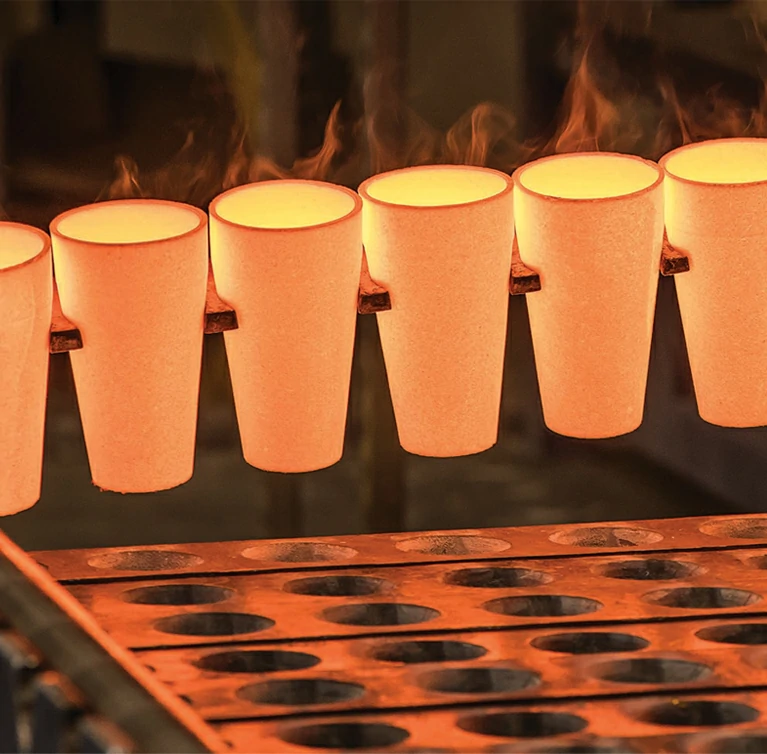
Two crucibles exposed to the same fire assay flux may show significantly different levels of erosion. The difference is often related to ceramic formulation and manufacturing characteristics.
Ceramic Composition
The composition of the ceramic determines how it responds to molten flux and slag. Clay, alumina, silica, and other refractory constituents can influence chemical resistance, mechanical strength, and thermal behavior.
A well-engineered formulation is designed to withstand the combined thermal and chemical stresses of fire assay rather than relying solely on high-temperature refractoriness.
Porosity and Flux Penetration
Porosity is another important factor in crucible performance. Accessible pores can allow molten flux to penetrate beneath the surface, increasing the area available for chemical interaction.
However, eliminating porosity completely is not necessarily the ideal solution. Ceramic structure must balance chemical resistance with other requirements, including thermal shock resistance. Controlled porosity can therefore be an important part of crucible design.
Wall Thickness and Microstructure
Wall thickness and microstructure also affect erosion performance. A uniform ceramic structure and consistent wall thickness help provide predictable behavior during fusion.
If chemical attack gradually reduces wall thickness, the remaining ceramic may become less capable of handling mechanical and thermal stress. This is one reason why chemical erosion and thermal shock should not be considered completely separate failure mechanisms.
Fire Assay Flux vs. Crucible: Finding the Right Chemical Balance
Good assay performance requires compatibility between the charge chemistry and the ceramic material. The objective is to create effective separation while minimizing unnecessary attack on the crucible.
Match Flux Chemistry to Crucible Composition
Different ceramic formulations have different levels of resistance to molten fluxes and slags. When selecting a crucible, laboratories should consider the chemistry of the complete charge, including litharge, sodium carbonate, borax, silica, and the sample itself.
A crucible that performs well under one flux system may not provide the same service life under another.
Avoid Excessive Flux Loading
More flux does not automatically mean better assay performance. Excessive flux loading can increase slag volume and the amount of molten material in contact with the ceramic.
An appropriately balanced charge can support effective fusion while limiting unnecessary chemical exposure. Following established assay procedures and adjusting the charge according to sample characteristics is therefore important for both assay quality and crucible longevity.
Control Fusion Temperature and Time
Temperature and exposure time directly influence chemical reactions between flux, slag, and ceramic. Excessive temperature or unnecessarily long fusion times can increase material interaction and accelerate erosion.
Maintaining appropriate operating conditions helps reduce chemical attack without compromising the required fusion and separation process.
How to Reduce Crucible Erosion and Improve Crucible Longevity
Improving crucible longevity requires attention to both material selection and operating practices.
1. Use a Compatible Fire Assay Flux
Select a flux system appropriate for the sample and compatible with the crucible material. Consider the complete chemical environment rather than focusing on one flux component.
2. Avoid Excessive Chemical Attack
Review flux loading, slag behavior, temperature, and fusion time when unusual erosion occurs. Excessive chemical exposure can often be reduced through better process control.
3. Select the Right Refractory Ceramic
Choose refractory ceramics based on the actual assay environment. Chemical resistance should be considered alongside thermal shock resistance, mechanical strength, and expected firing frequency.
4. Control Porosity and Penetration
A controlled ceramic structure can help limit excessive flux penetration while maintaining suitable thermal performance. Consistent manufacturing is particularly important for achieving predictable porosity and microstructure.
5. Monitor Crucible Wear
Regularly inspect crucibles for wall thinning, surface degradation, flux penetration, cracking, or other visible changes. Tracking crucible performance across repeated firings can help laboratories identify when replacement is necessary and determine which ceramic formulation provides the best service life.
Fire Assay Crucible Selection: What Should Labs Look For?
When selecting a fire assay crucible, laboratories should evaluate more than purchase price. Performance under the complete assay cycle is a better indicator of overall value.
- Chemical Resistance: The ceramic should withstand the chemical environment created by the selected flux and molten slag. Resistance to chemical attack is particularly important when working with aggressive flux systems or demanding sample types.
- Thermal Shock Resistance: Crucibles experience rapid temperature changes during loading, fusion, pouring, and cooling. Good thermal shock resistance helps reduce cracking and complements chemical durability.
- Controlled Porosity: Porosity affects both flux penetration and thermal behavior. A controlled and consistent pore structure can help balance chemical resistance with resistance to thermal stress.
- Consistent Manufacturing Quality: Consistent composition, dimensions, wall thickness, and microstructure help laboratories achieve more predictable performance from batch to batch. Manufacturing consistency is especially important for high-volume assay operations.
- Performance Under Repeated Firings: For laboratories using crucibles across multiple firings, long-term thermal and chemical durability becomes particularly important. A crucible with a higher initial cost may provide better overall value if it delivers reliable performance across more firing cycles.
Conclusion: Flux Chemistry and Ceramic Quality Must Work Together
Fire assay flux is essential to the gold assaying process, but its chemical activity also makes crucible compatibility an important consideration. Litharge-containing phases, sodium carbonate, and borax flux can all contribute to interactions with ceramic materials under high-temperature conditions.
The extent of crucible erosion depends on more than flux composition alone. Ceramic formulation, porosity, wall thickness, microstructure, temperature, exposure time, and firing frequency all influence performance. By matching flux chemistry with an appropriate refractory ceramic and maintaining controlled operating conditions, laboratories can reduce chemical attack and improve crucible longevity.
For professional assay operations, the most effective approach is to evaluate the flux and crucible as a complete system. The right combination can support reliable fusion performance, reduce premature crucible failure, and improve the overall efficiency of the assay process.